
Tackling Stigma Champion #9: Dr Javeed Sukhera on what happens when stigma is built into the system (and how to stop it)
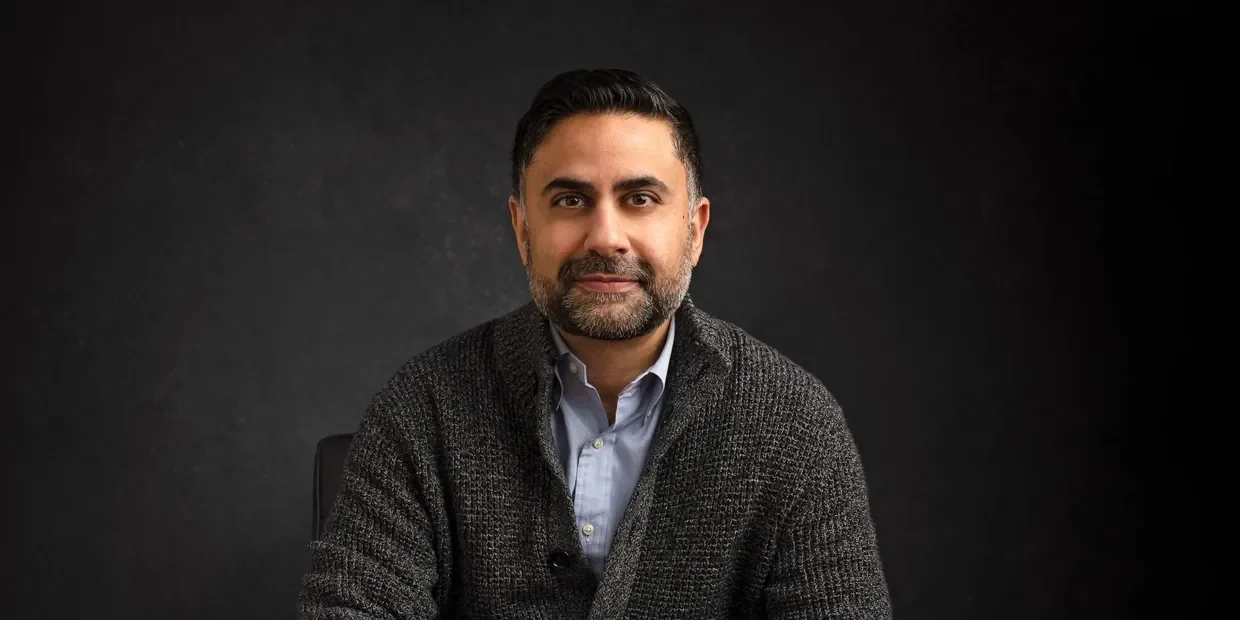
In our 9th Tackling Stigma Champion interview we speak with Dr. Javeed Sukhera, an internationally renowned clinician, educator, and researcher.
He currently serves as Associate Chief Academic Officer at Hartford HealthCare, Chair of Psychiatry at the Institute of Living (IOL) and Chief of Psychiatry at Hartford Hospital in the US.
Stigma in healthcare is often treated as an individual problem - something that happens in moments between people. But for Dr Javeed Sukhera, that framing misses where much of the harm sits.
Across his work across psychiatry, mental health, education, and health systems, Dr Sukhera has seen how stigma is often built into the rules, policies, and decisions that shape care. From what gets funded, to how risk is assessed, to what is defined as ‘medically necessary.’
So it’s not just about what individuals say or do, it’s about how stigma is built into the system itself.
And if that’s the case? Then that’s where the work has to happen.
Javeed’s tips at a glance
Focus not just on individual behaviour, but on how the environments people work in enable stigma, because all of us are part of systems where it’s baked in
Move beyond training that points fingers and instead hold up the mirror so people can see their role in harm and change
Examine tools like triage scores and risk assessments to understand who they disadvantage and what assumptions they carry
Pay attention to practical signals, like who gets a panic alarm, because they shape how people think and act over time
Take a cross-sector view, because structural stigma shows up beyond healthcare in systems like housing, policing, and justice
Co-design change from the start with people who have lived and living experience, rather than bringing them in at the end
Stop separating experience and expertise, and recognise the whole human in how people contribute to the work
Be strategic about where you start, because the work can feel overwhelming.
Build in accountability, because without enforcement, policies and legislation won’t shift underlying inequities
Reframe the conversation by focusing on the cost of inaction, not just the cost of change
Tell us about your journey into this work
I’m a psychiatrist by training, and early in my career I was working as a child psychiatrist in Canada. I really observed how many dehumanising ways my patients were treated in hospital settings.
What struck me was that the people doing it were often friends and colleagues. And I just wondered, who is this person that I’m seeing? It’s not the same person I know. There’s something happening here that we need to understand.
That led me into medical education, which turned into a PhD. It started with a question: what are the ways in which we might unconsciously or unwillingly discriminate against people with mental health challenges?
But that work opened my eyes to something bigger. In healthcare, we teach people to detach and compartmentalise, to see themselves as objective. But we’re still human. And part of where stigma comes from is our fear of our own value.
There was also a violent incident that made me realise that focusing only on interpersonal stigma wasn’t going to lead to sustained change. We had to look at how stigma is embedded structurally in systems.
Now I lead the Institute of Living in Hartford, where we’re trying to take that theory and put it into practice.
You’ve previously described stigma as being “baked into the system.” What does that look like in practice?
One example comes from Canada.
The Canadian health system is universal, but when it was designed, what counted as “medically necessary” care was defined in a way that largely excluded psychiatric care.
So the system is effectively a two-tier mental health system. What’s considered medically necessary is exclusionary, and that shapes what’s available, what’s covered, how much it costs, and how long people wait.
In the United States, you see the same issue play out differently.
There was legislation requiring what’s called parity, meaning insurers had to cover mental health on par with physical health. But in many places, that promise hasn’t been actualised.
Where I live in Connecticut, I worked with a group of people to advocate for enforcement. We’ve now passed legislation that gives that law teeth. Insurers are fined if they’re not held accountable, and we’re only just starting to see those fines come through.
So that’s an example of a structural intervention. You can have legislation that legislates parity, but without enforcement, the inequity can persist.
What does it actually take to make those kinds of structural changes happen?
I think all of us who are working in research or practice have to recognise that decisions made at the government and systems level shape how stigma plays out.
Structural stigma doesn’t just show up in healthcare. It shows up in housing, in policing, in the justice system. So we have to take that cross-sector perspective, and recognise that there are decisions being made that either perpetuate it or begin to dismantle it.
For me, a big part of the work is building relationships and building capacity for advocacy.
But it’s also about partnership. That work in Connecticut didn’t happen in isolation. It involved people with decision-making authority, but also strong partnerships with community-based organisations and people with lived and living experience.
It was that collective advocacy, bringing different voices together, that demonstrated both the human impact and the cost of not taking action.
Why do so many structural stigma reduction efforts fall back on education and training?
When people see stigma, they tend to think “that’s a problem, but it’s not me”. So the response becomes, let’s gather those people, put them in a training, and that will somehow fix it.
For me, that idea was always ridiculous. It leads us to spend our time and energy pointing fingers instead of recognising that we’re all part of systems where stigma is baked in.
So the question for my work became, what if instead of pointing fingers, we held up the mirror?
That’s a different kind of education. It’s not just telling people this is a problem and how to fix it. It’s saying, you can be part of harm, and the system you work in can be part of harm, but there’s something you can do about it.
Although giving people feedback is confronting, we found that people still wanted to see it as actionable and do something about it.
Over time, that doesn’t just lead to changes in individual behaviour. People start reflecting on the environments they’re working in and how those environments are enabling stigma. And that’s where they begin to advocate for changes to policies, tools, and the way decisions are made.
Do you have any practical examples of where structural changes have been made?
After conducting training in an emergency department, the feedback we got was, “It’s really fast paced here, we don’t have time, but we’ll see what we can do.”
We then evaluated them longitudinally. What we found was that reflecting on their own behaviour mattered, and it led to change despite those initial concerns.
Over time, people started reflecting on how the environment they were working in was enabling stigma.
So it went from changing themselves, to role modelling change, to actually advocating for changes to things like policies, tools, and algorithms. For example, they changed how they triaged patients.
The process for triaging patients is just one tool used in acute settings that can perpetuate stigma as it uses things like triage scores or violence risk assessments.
But those tools aren’t always calibrated for people who might be struggling with mental illness. So they can end up disadvantaging them.
It’s also about where and how those tools are used. Every setting needs to be safe, but if your assumption is that risk sits in mental health or behavioural health spaces, you’re going to have blind spots.
One example is delirium. That’s a medical condition, but a lot of serious incidents happen there, not in traditional psychiatric settings.
So part of the question becomes: where are we putting these tools, who are they affecting, and are they actually addressing risk or unintentionally reinforcing discrimination?
You see similar signals in training as well. For example, giving students panic alarms only in psychiatric settings. That sends a message, even if it’s not intentional.
Over time, those kinds of signals shape how people think and how they practise.
How do you navigate situations where there may be real risks - such as panic alarms only in psychiatric settings (mentioned above) - without reinforcing stigma?
I think that’s the key, being able to hold that kind of ambivalence. We often default to thinking it has to be one or the other. But those two things can exist at the same time. Part of the work is disrupting that kind of dichotomisation.
In the stigma literature, Pat Corrigan talks about how some approaches are about normalcy, normalising vulnerability and the fact that people might struggle. And some approaches are about solidarity, where someone says, I don’t know what that’s like, but I support you.
I would argue that real transformative change has to have both.
We have to recognise that all of us could be in a position where we are stigmatisers, but also that we can be stigmatised at the same time. And it’s by holding both that we can be part of change ourselves, instead of outsourcing it to others or to systems.
At the same time, we have to be careful not to create a sense of helplessness when we talk about how stigma is baked into the system.
If we don’t address that, it can lead to detachment or disconnection. We’ve seen that in studies with medical trainees, where caring for people who inject drugs, or other highly stigmatised groups in hospital settings, without intention, can lead to an erosion of empathy and even avoidance of working with that population.
For someone who can see structural stigma in their own service, where should they start?
Start by remembering that you were never meant to do this work alone. Structural change has to be co-designed with others, working across perspectives, including with those who have lived and living experience.
You also have to be clear about what you’re trying to change and how you’re going to measure it over time. Otherwise it’s very difficult to sustain progress.
At the same time, you can’t boil the ocean. It can feel very overwhelming, so you have to be transparent and strategic about where you start, being honest about what’s within your control and what isn’t, and building trust as you go.
You should expect disruption. But the work is to stay with it, work through that, and then embed the change structurally over time.
I often think about this as three components. First, co-design. Second, measuring progress through transparent reporting and third-party oversight, so there’s an external lens on where stigma might be baked in. And third, embedding and sustaining that change through policy, resource allocation, and governance.
What does meaningful co-design look like in this context?
I think it’s an essential part of addressing structural stigma to work in partnership with people who have lived and living experience. And it goes beyond consultation. There needs to be a real centring and uplifting of voices that bring that perspective into the work.
But I also think that issue of dichotomisation plays a role here. It’s not just about a divide between people who are part of the system and people who are served by the system.
A lot of us who work in the system have lived and living experience too, whether that’s through our own experiences or through people close to us. So it’s not about separating someone with lived experience from someone with expertise.
It’s about recognising how both experience and expertise enhance one another, together at the same time. That’s a key part of co-design. It can’t just be putting people under labels or categories. It’s about recognising the whole human, and what people bring.
If you had a minute with a policymaker, what would you say?
I think it depends on context, so it’s hard to answer universally. But at the end of the day, all of us know what it’s like to struggle and to suffer. We know what it feels like to be judged, or to feel like systems that should be serving you are not, or are not designed to meet your needs.
So I think the most important thing is for decision makers to understand those human stories, the ways in which systems fall short, alongside tangible, practical solutions.
A lot of the time, when this work is translated into policy, the question becomes, what’s the risk of doing this, or how much will it cost?
I think we have to turn that upside down and ask, what’s the risk of not doing it? What’s the human cost of preserving the status quo?
Because when people experience shame and blame, and internalise that, it’s linked to real outcomes, including suicide.
So it’s through sharing those human stories, and emphasising the cost of inaction, that we can compel decision makers to act.
What would you like to see happen in the next decade?
I think the work on addressing stigma has improved over time. We’re in a much better place than we were before.
But we need to continue that shift towards the structural dimensions of stigma, towards measurable, tangible, and concrete change.
That means stronger legislation, and accountability to make sure that people who struggle with mental illness are getting the same outcomes as everybody else.