
Tackling Stigma Champion #8: Andrew Wilson on vulnerability, visibility, and the courage to be seen
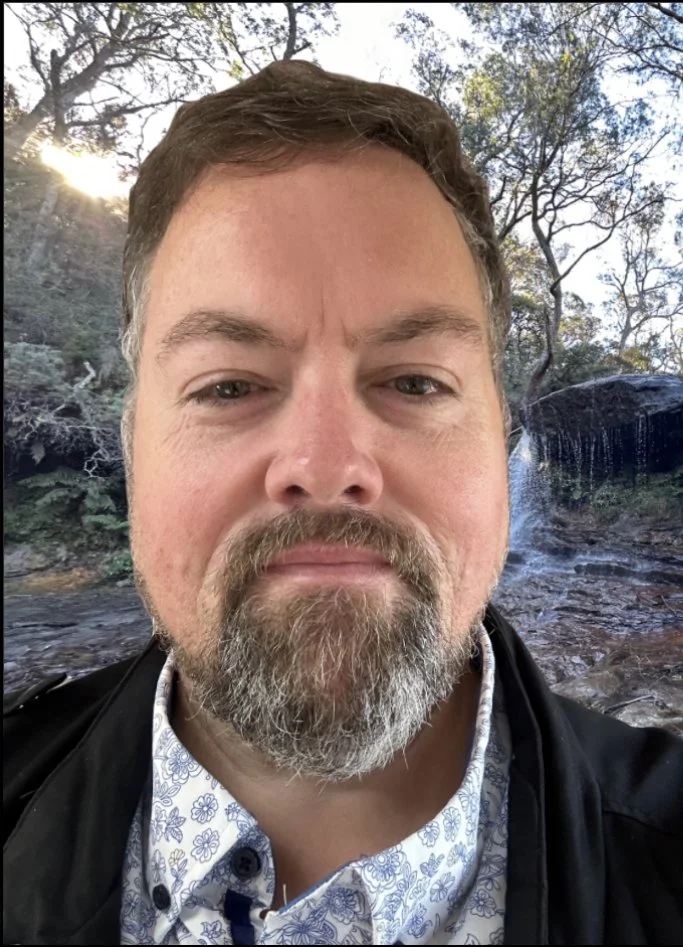
Stories play an important role in tackling stigma. They challenge assumptions, make the impact of stigma visible, and help people realise they are not alone. But for people from stigmatised communities, telling your story isn’t easy.
For our eighth Tackling Stigma Champion, we spoke with Andrew Wilson, Engagement and Advocacy Lead at the Weight Issues Network (WIN), about why he decided to share his story and what others can learn from the experience.
Andrew’s work spans advocacy, media, and peer-led support for people living with obesity. Through the groups he runs, he works closely with people navigating stigma in their everyday lives, from healthcare to family and community settings.
In these spaces, one thing becomes clear: before people can advocate publicly, they first need to feel safe enough to speak at all.
Tell us a bit about yourself and the work you’re doing
I live in the Blue Mountains in NSW and I’ve been doing community radio for a long time. I also run a couple of men’s support groups, which I started about six years ago.
In my work life, I’m the engagement and advocacy lead for the Weight Issues Network, a peak body for people living with obesity. A big part of what we do is break down weight stigma and bias, which people are still experiencing every day, at school, at work, and in society more broadly.
Our work spans advocacy, media, and working with policymakers, but a big part is also the support groups. In those groups, we try to demystify obesity, cutting through misinformation and bringing in both experts and people with lived experience to talk about the science and the reality of it.
When people first join, they often have their camera off. They don’t want to be seen. With obesity, you’re wearing a lot of your issues on your body, it’s not something you can hide.
But over time, those groups become like a family. People turn their cameras on, start engaging, and want to be part of the advocacy. We also stay connected outside of meetings through things like WhatsApp, so people have support when they need it.
How does stigma show up in healthcare for people living with obesity?
Even getting to an appointment can be a hurdle for someone living with obesity. If you’ve lived with stigma your whole life, with messages that you’re lazy or that it’s your fault, you have to push through all of that just to ask for help.
Then it depends who you see. Some clinicians still have that old-school mentality. Even well-meaning ones can use language that feels blaming. Some people have experienced being looked at in a way that feels like disgust.
The idea that it’s just “eat less, move more” is outdated. We now know there are so many factors involved; genetics, mental health, trauma, medications, socioeconomic factors.
And then when you do go and see someone, it’s about their training. Are they going to be empathetic? Are they going to try and help find a solution? It can be a bit of both. It can feel like Russian roulette.
For me, I saw a doctor and had a really stigmatising experience, probably one of many over my life. It made me not want to go back. That delayed my treatment for nearly 10 years, and I became very sick in that time.
The delay in treatment is the worst thing I think.
What are you hearing from others in your support groups?
The stories are very similar.
Stigma stops people living a full life. People self-isolate. They don’t want to be seen in a bigger body because the narrative is that they’ve done it to themselves.
It affects everyday life. I remember taking my son to school and feeling like other parents avoided me, like I had something they might catch. I worried about how that would affect him too.
When you’re struggling with your health, you need support from family and friends. But if you’re shutting yourself off you can’t get that support, and it affects your mental health and your physical health.
There was one woman who was trying to have children. She knew there were fertility issues in her family and it was genetic, but when she sought help, she was told to just lose weight.
Eventually she did lose weight, and suddenly services were much more willing to help her. But by then, it was too late to conceive. That’s the impact stigma can have.
What does it take for someone to start sharing their story publicly?
It’s a big step. If you’d told me a few years before I started doing this that I’d be speaking in media or at conferences, I wouldn’t have believed you.
When you’re the biggest person in the room, you want to be the smallest. You don’t want to be seen.
What helped me was coming out of the stigma. Getting help, meeting clinicians, and being part of WIN helped me understand that it wasn’t just lack of self-control. There was much more to the picture.
I felt less stigmatised from the start, and that was really important.
I also realised there wasn’t really anybody talking about it in Australia, and particularly not men. Men weren’t talking about it. And I just knew I had to do something.
I was feeling more confident in myself, I had support around me, and I just had a go.
I haven’t stopped since. And while I don’t particularly look forward to interviews, I just hope that I’m bringing things that other people need to hear.
When you hear someone else’s story, you see yourself in it. That's a big part of the motivation: letting other people know they're not alone, now that I know that I'm not alone.
What advice would you give to people sharing their story for the first time?
Have your boundaries.
Think about what you’re comfortable sharing, and also how it might affect your family. There was a story I did that my son later got some negative comments about at school. That’s something I hadn’t fully considered at the time.
You need support around you. You need to debrief afterwards. Talking about lived experience, especially the harder parts, can bring things back up and leave you pretty exhausted.
If you’re working with media, try to have some agreement around what will be shared. Whether that’s reviewing written content or having clarity on what topics will be covered.
And be clear on your key messages. What do you want people to take away?
What should organisations keep in mind when asking people with lived experience to share their story?
Be genuine in your help. Don’t just do it to tick a box or helicopter in, ask for something, and then leave.
If you’re asking people to share their lived experience, they may be reliving traumatic parts of their past. So you need to support them properly. Make sure it’s a safe space, that they feel safe in that environment, that there’s no judgement, and that they feel empowered to share.
And think about what happens afterwards too. Make sure there’s support after. Make sure people feel that their lived experience is helpful, and that there won’t be any negative implications for them.
Because often, people won’t talk about stigma in a workplace. It can be seen as a weakness. It’s not something you’d necessarily tell your boss, because you might think it could affect opportunities or how you’re seen.
But being able to share lived experience is actually a strength. It’s being vulnerable and talking about those darker times to help other people.
If organisations get this right, people can feel more empowered, not less.
Are you seeing any positive shifts in how stigma is being addressed?
For a long time, change was very slow. But I am starting to see it pick up now.
Language is changing. There’s more understanding that people have different challenges and deserve compassion.
In the media, we used to have to ask journalists not to use images that zoom in on stomachs or show people eating burgers to reinforce stereotypes. Now, particularly with journalists we’ve built relationships with, that is starting to change.
In healthcare, I’m hearing more examples of collaborative relationships with GPs. It’s becoming more of a two-way conversation, rather than everything being directed by the GP. They may not know everything, they’re generalists and might not have the training or know where to refer someone. But when they’re willing to work with their patients, it can be a really beautiful relationship, and I’m starting to hear more examples of that.
People are also becoming more empowered. Being part of groups like WIN helps people realise they don’t have to accept poor treatment. There’s still a long way to go, but I can see movement.