
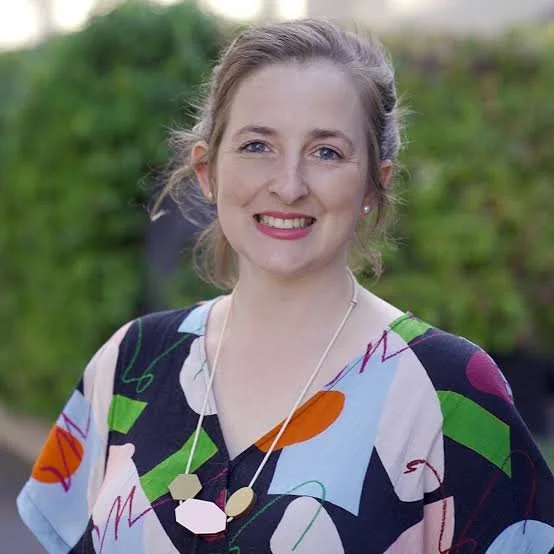
Tackling Stigma Champion #12: Dr Elizabeth Holmes-Truscott on communicating health risks without stigma
How do we communicate health risks without reinforcing the stigma we're trying to tackle?
It’s a question Dr Elizabeth Holmes-Truscott is investigating through her work on diabetes stigma at the Australian Centre for Behavioural Research in Diabetes (ACBRD).
But it’s a challenge that extends far beyond diabetes. Across many stigmatised health conditions, we need to communicate risk and encourage action without creating fear, blame or judgement.
For our latest Tackling Stigma Champion interview, we spoke to Elizabeth about what drives diabetes stigma, where progress is being made, and what her latest research can teach us about developing health messages that inform and motivate without causing harm.
Elizabeth’s key lessons
Be specific. Oversimplifying health conditions can reinforce stigma and misconceptions
Don't rely on fear. Fear, blame and judgement can disengage people rather than motivate them
Give people somewhere to go. Raising awareness of risk isn't enough. Pair it with practical, achievable action
Think beyond individual responsibility. Acknowledge the wider social and structural factors that shape health
Centre lived-experience leadership. Involve communities in shaping messages, interventions and research, not just reviewing the end product
Test for harm. Ask whether your message could reinforce stereotypes, stigma or unintended negative attitudes
Look beyond reach and recall. A memorable, widely seen campaign isn't successful if it causes harm
Review the everyday stuff. Forms, posters, clinical pathways, educational materials and routine communications can all embed stigma
Measure what matters. Ask whether people feel respected, heard, included and free from judgement and discrimination
Learn across stigma areas. Different conditions share common drivers and challenges, so don't reinvent approaches that other fields have already tested
Tell us about yourself, your background and your work in diabetes stigma.
I'm a Senior Research Fellow at Deakin University and Deputy Director of the Australian Centre for Behavioural Research in Diabetes (ACBRD, a partnership between Diabetes Victoria and Deakin University. I've been at the ACBRD for 16 years, working across the behavioural, psychological and social aspects of diabetes, with the ultimate goal of making living with diabetes a little easier and improving health and quality of life.
A key part of my work has always been partnering with people living with diabetes. Very early in my career, it became clear that diabetes stigma was a recurring theme. It was a lived reality that was common, harmful and relatively under-recognised. When I first started out, diabetes stigma was still an emerging area of research. I have been fortunate to contribute to a growing body of work that has helped move the conversation from asking whether diabetes stigma exists to asking what we can do about it.
In 2019, this work also became personal. I was diagnosed with gestational diabetes while pregnant with my son. I received the diagnosis over the phone while sitting at work and, during that same conversation, was told by a health professional I’d never met to get off the "junk food". As someone who understood the evidence, I knew gestational diabetes was complex and not caused by diet alone. Yet I still experienced guilt, self-blame and shame and found myself telling very few people because I worried about judgement and misconceptions. That experience gave me a new understanding of diabetes stigma.
That experience pushed me to do more diabetes stigma research and advocacy across all diabetes types. Most recently, I've had the privilege of co-leading the International Consensus Statement on Diabetes Stigma and Discrimination and the inaugural Global Summit to End Diabetes Stigma.
What does diabetes stigma look like in practice, particularly within healthcare?
One of the more consistent experiences is blame and judgement. That can be explicit through labelling. Someone might be referred to as a “diabetic patient”, “failing” treatment”, "non-compliant", “unmotivated or “uncontrolled”. But it can also be less explicit: small comments, body language, looks, questioning styles or interactions that leave people feeling judged rather than supported.
We also see examples of diagnostic overshadowing, where concerns may be attributed to diabetes rather than properly investigated, as well as reports of unequal treatment and restricted choices based on assumptions about the individual.
Importantly, the effects often extend beyond a single consultation. Experiences of stigma can undermine trust, contribute to self-blame and distress, and lead people to avoid healthcare or disengage from support altogether. In this way, stigma is an often-overlooked indicator of safe and high-quality care.
What are some of the biggest drivers of diabetes stigma, including the way we talk about different types of diabetes?
A major driver of diabetes stigma is oversimplification. Public conversations about diabetes often reduce a complex group of conditions to a single type, a single risk factor or even a single behaviour. In reality, there are multiple types of diabetes, each shaped by a complex mix of genetic, biological, environmental, social and behavioural factors. No type of diabetes is caused by a single factor, and no type is anyone's fault.
We often say diabetes has an image problem, but really it has a narrative problem. We're unlikely to make progress while diabetes of any type continues to be understood primarily through a lens of individual responsibility.
Fear, blame and disgust are also important drivers. While often well-intentioned, risk messages that rely on fear, scare tactics, or personal responsibility can reinforce stereotypes, contribute to shame and disengagement, and become barriers to the very behaviours they are trying to promote.
Where have you seen genuine progress in tackling diabetes stigma?
The common thread across the progress I've seen is lived-experience leadership and partnership. People with diabetes have always led advocacy efforts, and increasingly researchers, organisations and professional societies are recognising that the most effective solutions are developed with people affected by diabetes, not for them.
I’ve been privileged to be part of these collective efforts. As part of our international consensus work, developed with people with lived experience, we created a global pledge to end diabetes stigma. Around 4,500 individuals and organisations across more than 120 countries have now taken it. You can take the Pledge here.
I've also been encouraged by progress in language. In 2011, the ACBRD worked with Diabetes Australia to publish the first position statement calling for a change in how we talk about diabetes. This has now been updated, and there are now more than 30 diabetes language statements and guidance documents worldwide.
We're also seeing greater attention to diabetes stigma in research. Ten years ago, stigma was largely absent from major diabetes conferences. Now we're seeing entire sessions dedicated to this issue.
You're currently researching diabetes and cardiovascular risk messaging through the eyes of the community. What prompted this work?
A few years ago, we led a study exploring eight Australian diabetes awareness-raising campaigns among the general public without diabetes, plus adults with type 1 and type 2 diabetes. Up to 24% of participants reported campaigns as stigmatising.
In advocating for stigma-free communication, we're increasingly asked by diabetes organisations and industry: can we talk about risk and complications without stigma?
We can, we need to, and we must. The question is how.
Our current study asks adults around the world, both with and without chronic conditions, to share examples of diabetes and cardiovascular campaigns they've found helpful, motivating and respectful, as well as those that missed the mark.
What are you learning about better health messaging, and what should communicators be doing differently?
We're already seeing some clear themes in our preliminary analysis. People with and without diabetes see health and risk campaigns as important for community education, but they also want practical, achievable, and stigma-free guidance.
We can't stop at raising someone's understanding of risk. We also need to ask whether the action we're encouraging is achievable and whether people have access to the support needed to act on it.
We're also seeing negative impacts from fear-based messaging, negative framing and an emphasis on individual responsibility, which can evoke guilt, anxiety, fear, fatalism and potentially contribute to disengagement from care.
A real bugbear of mine is campaign success being measured by recall and reach. A well-recalled, wide-reaching campaign that causes unintended harm and stigma is not a successful campaign.
We need to involve people with lived experience to develop useful and acceptable campaigns, evaluate and minimise unintended harms, and translate research into tools organisations can actually use.
For communications teams, I'd ask: Are community meaningfully involved in development?. Is the message accurate and specific? Is the action we're asking people to take achievable? Are we acknowledging the broader social determinants of health?
And ultimately: are we leaving people with support, or stigma?
If you had five minutes with a hospital manager or policymaker who wanted to reduce stigma, what would you ask them to do?
First, I'd congratulate them for recognising that addressing diabetes stigma, and health stigma more broadly, is part of delivering high-quality and safe care. Then I'd focus on three things.
First, measure it. We prioritise what we measure. We need to ask people with diabetes whether they feel respected, heard, included in decision-making and free from judgement and discrimination.
Second, equip the workforce. Awareness of stigma needs to translate into care. Are health professionals equipped to provide stigma-free communication, person-centred and empathic care? And how do we sustain that over time, particularly when burnout can affect empathy?
Third, review systems and policies through a stigma lens. That includes intake forms, educational materials, clinical pathways, waiting-room posters and other patient-facing communications.
Stigma is often unintentional, but it can become built into routine practices and environments that nobody has stopped to question.
As a researcher, I believe these same principles apply to my work. We need to critically examine our assumptions, tools and materials and work with communities to ensure research is stigma-free.
If we spoke again in five years, what would you hope had changed?
I hope fewer people routinely encounter blame, judgement or discrimination because they have diabetes. I'd like to see better public understanding of all types of diabetes, greater visibility of diverse lived experiences, stronger peer support, workforce training in stigma-aware communication, stronger protections against discrimination, and meaningful involvement of people with lived experience across healthcare, policy, advocacy and research.
To know whether we're achieving that, we also need better measurement and benchmarking of diabetes stigma across clinical care, the media, workplaces and the general public.
Diabetes stigma, like all health stigma, occurs across multiple settings. Our response needs to be just as broad.