
How do we talk about stigma without reinforcing it?
When we communicate about stigma, our instinct is often to correct what's wrong: challenge the stereotype, bust the myth, give people the facts.
But what if repeating a stigmatising idea, even to correct it, actually helps make it stronger?
That's one of the challenges Mark Chenery, co-founder and director of Common Cause, put to participants in our recent Tackling Stigma in Healthcare Network virtual workshop.
Drawing on Common Cause research across issues including drugs, weight, homelessness, social security, addiction and dependence, Mark explored how we can communicate in ways that shift attitudes, rather than inadvertently reinforcing the stigma we're trying to tackle.
Facts aren't enough
A lot of communication starts from a reasonable assumption. That if people believe something that's wrong, give them better information.
The problem is that people don't make decisions based on facts and logic in the way we often assume.
Cognitive scientists estimate that at least 95% of our thinking and processing happens below conscious awareness. Our existing beliefs, values, biases and mental shortcuts influence what feels right or wrong. Often, we make a decision at a gut level first and find the facts and logic to explain it afterwards.
Mark described the conscious brain as something of a “PR mechanism”, working hard to put forward a rationale for a decision that's already been made.
This helps explain why giving someone evidence that contradicts a strongly held belief can have surprisingly little effect. They might question the source, find a problem with the research or seek out evidence that supports what they already believe.
The duck, the rabbit and the people we can persuade
Someone holding a stigmatising belief doesn't necessarily mean their thinking can't shift. The question is where to put our efforts and what messaging is most likely to make a difference.
Common Cause broadly thinks about audiences in three groups:
● a supportive base
● the opposition
● the persuadable people in between
While the opposition can be difficult to shift, Mark says around 60–70% of people typically fall into that persuadable middle. To explain the idea, he used the familiar duck-rabbit optical illusion. Some people see a duck first, others a rabbit, but most can see both.

The same can be true of how we think about social issues. People can hold different, even contradictory, perspectives at the same time, something known as biconceptualism. It's why Mark challenges the familiar advice to meet people where they're at.
“Our job isn't actually to meet people where they're at. Our job is to take them to where they're capable of going,” Mark explained.
The danger is accidentally taking them in the wrong direction.
Say someone argues that people who smoke only have themselves to blame if they get sick. We could spend our time explaining why they're wrong, but in doing so we're still talking about smoking through a frame of individual blame.
As Mark warned in the webinar, “we’re getting caught up in their frame.”
Rather than trying to win over the person making the comment, consider the much larger persuadable audience listening. What do we actually want that audience to understand?
What values are we activating?
Our values also influence the direction our thinking takes, and the way we communicate can bring different values to the surface.
“When you engage, for example, through your messaging, values around self-direction, universalism or benevolence, it increases people's likelihood to think and act in more pro-social ways,” Mark explained.
These include ideas such as freedom and independence, equality and social justice, honesty and helpfulness, and our shared humanity.
Other values can pull us in a different direction. Messaging centred on status, competition, wealth and power, for example, can increase discrimination against groups perceived as different from ourselves.
Then, there’s fear.
“When you scare people, that activates their security values,” Mark said.
Fear can make people less comfortable with ambiguity and more likely to seek simple, black-and-white answers. That's worth considering in health communication, where fear is still commonly used to encourage behaviour change.
Simply dropping words like equality, honesty or freedom into a campaign isn't the point. We need to look at the story underneath the message and the values it's drawing on.
The problem with myth-busting
It seems logical that if we hear a stigmatising belief, we should name the misconception, then explain why it's wrong. But Common Cause cautions that doing so can inadvertently reinforce the association we're trying to challenge.
“When you tell people what not to think about other people, you are forcing them to think that thought,” Mark explained, before asking us not to think about a grey cartoon elephant. Which, of course, we all immediately did.
Mark's advice was to avoid myth-busting most of the time and start with what you want people to understand instead.
There will be times when a harmful claim does need a response. For those situations, Mark introduced the truth sandwich: start with the truth, carefully address the misinformation and its harms, then return to the truth.
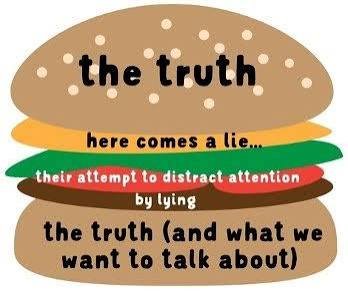
Here’s an example:
Start with the truth: The latest evidence shows you can be healthy at any body size.
Warn a myth is coming: But there’s a harmful myth about people in larger bodies.
Briefly mention the myth: It assumes you can tell how healthy someone is by looking at their size, and that changing their weight is simply a matter of trying harder.
Explain who is spreading the myth and what motivates them: The weight-loss industry profits from promoting this idea and selling people solutions to “fix” their bodies.
Why it’s wrong and harmful: Not only does this ignore the mountain of evidence that shows diet and movement are far more important than weight in determining health outcomes, it causes stigma and discrimination that stops people getting the healthcare they need.
End with a reminder of the truth: People of every size deserve support to pursue health and wellbeing without stigma or pressure to conform to outdated body standards.
You don't have to kill the rabbit to make way for the duck
“We don't actually need to kill the rabbit in order for people to see the duck,” Mark said towards the end of the workshop.
That's a useful way to think about stigma communication.
We don't have to rebut every harmful statement or win over every opponent. We can put more of our attention into speaking to the people who can be persuaded, drawing on the values we want to encourage, and giving people another way to see the issue.