
Tackling Stigma Champion #4: Dr Roanna Lobo on burnout, bias, and being human
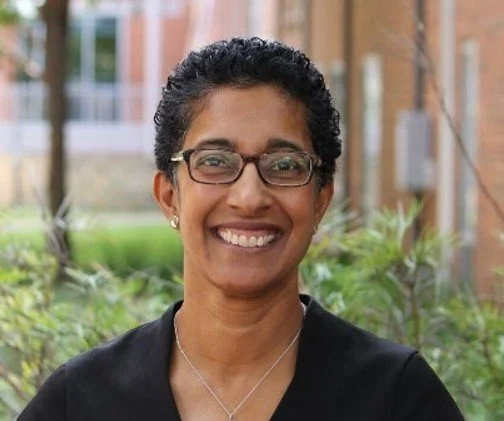
Tackling Stigma Champion #4
We speak with Dr Roanna Lobo, a Senior Lecturer in the School of Population Health at Curtin University, with more than 20 years’ experience working alongside communities who often face barriers to care, including people experiencing mental health concerns, people who use drugs, people experiencing homelessness, sex workers, LGBTIQA+ communities, migrants, and Aboriginal and Torres Strait Islander peoples.
Across all her work, Roanna focuses on co-design, cultural safety, long-term partnership, and how systems can unintentionally reinforce stigma.
Stigma isn’t only about individual attitudes. It’s shaped by how services are designed, who feels welcome in them, how staff are supported, and how culture is held across an organisation. In this interview, Dr Roanna Lobo explores these issues and more, sharing powerful advice for researchers and healthcare workers alike.
Roanna’s tips at a glance
Listen first, talk less
Don’t assume you already know — even when you think you do
Involve communities in shaping the research questions
Check consent and comfort throughout, not just once
Notice your own reactions — irritation can signal bias
Research should lead to action, not extraction
One-off projects are not enough — long-term commitment matters
Support staff experiencing burnout and emotional load
Embed anti-stigma practices into the fabric of an organisation
Don’t start what you can’t sustain — If the time, funding, or support isn’t there to do it right, reconsider doing it at all
Tell us about your background and what drew you to this work
I’ve been a researcher in public health for over 20 years now. My real interest is hearing people’s stories and really understanding their lived experience of either their health or accessing services. I’m interested in the inequities of health and how there are barriers to accessing services for a whole range of people. And I guess that systems view, that it’s all interlinked, individual and structural barriers to accessing care.
When did you start recognising stigma as a core part of these barriers?
In my experience, people rarely use the word stigma. They’ll talk about judgement, and they’ll talk about shame, and they’ll talk about cultural safety. They might talk about discrimination or racism, but they very rarely use the term stigma. But when I started to engage with the literature, that’s when I realised: oh, that’s what they’re talking about. They’re talking about perceived experiences of judgement, internalised stigma, and those shameful feelings that mean they might not want to go back to a service.
How do you approach research in a way that reduces stigma rather than reinforces it?
It needs to be really meaningful involvement. Communities shouldn’t just be consulted when things have already been designed. It’s involving them in what is the question we should be asking? How should we be collecting the data? Checking they have consent all the way through, not just at the start of the project. Maybe they’ll change their mind, and that's part of self-determination.
Honestly, my preference as a researcher is to be completely out of the limelight. I want communities to be seen and to be leading the project. I see my role as literally to make that happen and support it.
It’s also important to avoid assumptions.
What do you mean when you say it’s important to avoid assumptions?
I have an Indigenous colleague who talked about this idea of a cognitive snare, and it really resonated with me. When you know people, and you’ve worked with groups for a long time, you think you know what they’re going to say. You think you already understand their priorities. But then they’ll say something completely different.
If we’re not open to other ways of thinking, we miss it. We just have to listen more. We have to stop talking and just listen.
What advice do you have for researchers working with stigmatised communities?
Researchers often get criticised for the seagull effect: we swoop in, we grab the data, we swoop out, they never hear from us again, and nothing changes. You have to go in with an action mindset. Not just what data are we going to collect, but what are we going to do with it? Who needs to know the findings? How are we going to share them in a way that has impact?
Early in my career, if funding was being offered, I would just take it, whatever the amount. You’re building experience, and you think, yes, of course I’ll do that. But at this stage in my career, I’ve become really resistant to that.
To do this work well, it takes a lot of resources and a lot of time. If those aren’t there, I’d rather not do it, because someone’s going to get hurt in the process and we’re not going to achieve the outcome we want.
Can you share an example of research that led to real change?
We recently completed a four-year project to increase Aboriginal and Torres Strait Islander people who inject drugs access to needle and syringe programs. We developed a campaign for community, created an Educational Toolkit to improve cultural safety in services, and piloted an incentives-based peer education program where peers would tell others about services. That went really well. It attracted more funding and is continuing in different areas. But new trends and needs will emerge. The toolkit and campaign will need to change over time. A one-off four-year project doesn’t really cut it. Long-term investment is needed for sustained change.
Another project example is this LGBTIQA+ Intimate partner Violence (IPV) co-design project, Safer Options. Safer Options strives to educate primary care providers and the LGBTIQA+ community in Western Australia to appropriately recognise and respond to IPV.
What needs to shift inside healthcare settings to reduce stigma at a systems level?
You can say all the right words, you can look like you’re doing all the right things, but it’s not enough. We want to see action from the receptionist to the medical professional. It has to be across the board. It shouldn’t be that whilst the CEO is in place it’s a safe organisation, but when they move on it all falls apart. Policies to reduce stigma have to be part of the fabric.
So it’s not just about individuals — the culture of the organisation matters?
There are always going to be people in your services who have different viewpoints — and they’re entitled to that. But if you create a culture in an organisation where this is our policy and this is our viewpoint, people tend to self-select. I’ve left organisations because they didn’t sit right with my values. If a workplace is strongly grounded in non-stigmatising practice, people who don’t align with that will often move on.
How can services tell whether that culture is actually making a difference?
Maybe we should be measuring outcomes, setting KPIs. If we’re not seeing certain people accessing services, but we know they probably should be, then we have to ask ourselves: is this service meeting the needs of the community it's here to serve? Those are difficult questions to confront, but they matter.
And the people we’re missing are often the ones who will end up using more services in a more acute way, because of the barriers they’ve faced in accessing care. So even from an economic perspective, it makes sense to get it right for those groups.
And what about the workforce? How does burnout or emotional load play into stigma?
Nurses and other frontline workers work really hard. In some places like the emergency department, abuse is common. After 5, 10 or 15 years, you’re going to be a little bit done. So we need to understand it from their perspective. Why are they behaving like that? Where has that response come from? Sometimes it’s not about belief, it’s exhaustion. So we need job rotation, debriefs, psychological support, not just training.
And at an individual level — what can any of us do to avoid slipping into stigma?
When you have an emotional reaction to a patient or group, take a moment to ask: where did that come from? Maybe I’m burnt out, but maybe there’s a bit of a bias. And if you recognise it, that’s okay, because you’ve acknowledged it. We are a complex mix of how we were raised, what we’ve seen, what we’ve learned. You can’t help some of that, but once you’re aware of it, you can work on it.