
Tackling Stigma Champion #11: From HIV to hearing loss, what Dr. Laura Nyblade has learned from a lifetime studying stigma
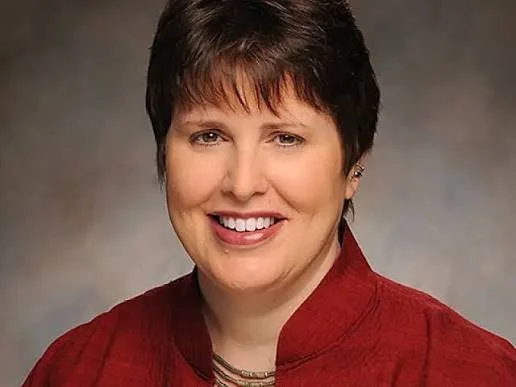
For much of her career, Laura Nyblade has heard variations of the same argument.
Stigma is too complex. Too context-specific. Too difficult to measure. Too difficult to change. Each time a new barrier emerged, it became the next problem she set out to solve.
Over more than two decades, Laura has helped shape the global understanding of stigma, developing measurement tools, designing and testing interventions, pioneering the Total Facility Approach, and most recently embedding stigma reduction into the training of future healthcare workers in Ghana, Tanzania and Zambia.
In our latest Tackling Stigma Champion interview, Laura reflects on what she has learned from tackling stigma across countries, conditions and healthcare settings.
Laura Nyblade's key lessons
The commonalities between different forms of stigma are often stronger than the differences
Stigma is a fundamental human process that everyone engages in, often without realising it
Four key drivers repeatedly emerge across settings: awareness, fear, values and beliefs, and structural/institutional factors
Intent does not determine impact. People can believe they are helping while still creating experiences of stigma
Fear is often at the heart of stigma, whether that fear relates to infection, safety, social judgement or something else entirely
Healthcare organisations can create or reduce stigma through their policies, systems and workplace culture
Sustainable change requires more than training individual staff. Leaders, managers, non-clinical staff and people with lived experience all need to be involved
Measurement can be a powerful tool for starting difficult conversations about stigma within organisations
Embedding stigma reduction into healthcare curricula may create more lasting change than relying on workplace training alone
Every barrier to stigma reduction presents an opportunity to move the field forward
Tell us about your journey into stigma research.
One of the first studies I was involved in looked at how communities in Botswana and Zambia might respond to the new knowledge that a drug (Nevirapine at that time) could prevent mother-to-child transmission of HIV. At the time, there was a strong assumption, particularly among medical personnel in the HIV response, that women would naturally take advantage of the availability of this drug by getting tested for HIV, taking the medication (Nevirapine at that time) and not breastfeeding, because who wouldn't want to reduce the risk of transmission to their child?
But what emerged from the research was something very different, a perspective rooted in the lived experiences and realities of many women’s lives.
Women would weigh that potential benefit against very real risks. They were worried about violence, losing their housing, relationship breakdowns and the consequences of being identified as living with HIV.
We hadn't set out to study stigma, but it was everywhere in the conversations.
Earlier in my career, during a research fellowship in Uganda, one of the HIV counsellors I worked with died. It was only after his death that I learned he was living with HIV. Here was someone supporting other people every day, yet I hadn't realised he was navigating that experience himself. It stayed with me.
Looking back, I think that was one of the first times I saw the power of stigma, even before I really understood what it was.
Those experiences made it impossible to ignore the impact stigma was having on people's lives. They also made me realise how little we understood about it and how little we were doing to address it.
You've worked across HIV, hearing loss, substance use, cancer, and other areas. You’ve also worked across multiple countries, including Viet Nam, Thailand, India, Ghana, Tanzania, and most recently, the U.S. What have you found is universal about stigma?
The biggest lesson is that the commonalities are stronger than the differences.
Early in my career, one of the dominant arguments was that stigma was too context-specific. People would say stigma in one country is different from another country, or different in one part of a country to another, or HIV stigma is different from every other form of stigma, so it would be impossible to develop approaches that could work across settings.
What we found through comparative research was that while the details differ, the underlying process is remarkably similar. Stigma is a fundamental human process. We all engage in it, often without realising it.
That doesn't mean the differences aren't important. They are. The specific drivers and manifestations of stigma can vary depending on the condition, identity or context. But the underlying mechanisms are often the same.
That's why I don't see it as a choice between universal and condition-specific approaches. We need both: a broad understanding of how stigma works, alongside strategies that address the specific drivers of different forms of stigma.
You talk about the “immediately actionable drivers of stigma” being similar across conditions. What are these?
If you want to reduce stigma, you need to understand what is driving it. There tends to be four “buckets,” though the nuance within them may differ.
1). Awareness
Many people simply don't recognise what stigma looks like in practice. We often hear, "I don't stigmatise anyone." Or, “I didn’t intend to stigmatise”.
But if it lands as stigma, it is stigma.
When we start unpacking behaviours, people realise that stigma can show up in ways they never considered. Gossip is one example. Many healthcare workers would never intentionally stigmatise a patient, but they may engage in conversations that unintentionally disclose information or reinforce stereotypes.
2). Fear
In HIV, that might be the fear of transmission. In substance use, it might be fears about violence or safety. In other contexts, different fears emerge. Through my work in hearing loss, it’s ageism or a presumption that someone is stupid.
Fear can also be social. In some settings, especially in Africa, healthcare workers worry that if they provide non-stigmatising care to people living with HIV, sexual and gender minorities, or other marginalised groups, others will assume they belong to that group themselves.
Understanding those fears is essential because they often shape behaviour in ways that create stigma.
3). Values & beliefs
People bring cultural beliefs, religious beliefs, personal experiences and assumptions into their work.
With addiction, there’s often a value held that it’s a moral failure. With obesity, it’s that there’s a lack of self-control. Cancer, well, it depends on what cancer you have. HIV, there may be a belief that you’re promiscuous and a judgment of that. And those values and beliefs shape the care provided.
For example, I once interviewed nurses who believed they were providing compassionate care to men who have sex with men. As soon as a patient disclosed their sexuality, they would pull out a Bible and begin praying for them, or refer them to mental health services because they believed something needed to be fixed. In their minds, they were helping. But the experience for the patient was often one of judgment, exclusion, and stigma.
The goal isn't to tell people what to believe. It's to help them reflect on how those beliefs shape their behaviour and whether that behaviour aligns with the care they want to provide.
4). Structural/institutional
You can change individuals, but if they're working within a system that pushes them in a certain direction, that change can only go so far.
This understanding sits at the heart of the Total Facility Approach (read more here), which recognises that everyone in a healthcare setting has a role to play. Clinical staff, non-clinical staff, people with lived experience, and management all need to be part of the solution.
Getting management on board is so important. Measurement can be a useful way to start those conversations. We often hear, "We don't have stigma in our facility. It's the one down the street that has the problem."
My response is usually, "Great. Let's measure it."
When we bring that data back to managers and staff, it creates an opportunity to reflect on what's really happening and start a conversation about change.
Tell us about your work embedding stigma into formal education for healthcare workers?
During implementation of the Total Facility Approach, hospital managers would tell us, "This is great. It's transformed our facility. But we have a lot of turnover. We have new staff coming in all the time."
Their message was simple: if you want lasting change, you need to get into the training and formation of healthcare workers. Otherwise, every facility has to start again each time someone new arrives.
That led to work with partners in Ghana, Tanzania and Zambia to embed stigma reduction into diploma-level nursing, midwifery and allied health curricula. It's been a long process. Curriculum reviews happen on five-year cycles, and changing them can take years. In our case, it's taken close to three years to get where we are today.
One of the biggest lessons came from the curriculum experts themselves. I went into the process thinking stigma should be a standalone course. They disagreed.
Their view was that stigma is relevant across every aspect of providing care, so it shouldn't be taught as a one-off course. It needs to be embedded throughout the curriculum and revisited across the years of training.
They also pointed out that standalone courses can disappear when curricula are reviewed. By embedding stigma into the core curriculum, it becomes much harder to lose over time.
They came back and said, "We think this is so important that it should be embedded throughout the curriculum." And they were right.
The curriculum is now being taught in Ghana, and we're close in Tanzania and Zambia. The next challenge is making sure tutors have the skills and support they need to teach it effectively. For me, that was the necessary first step, but it's not the final step. And of course, a lot of this comes down to funding.
Tell us about some of the ‘aha’ moments people have had during your workshops or research?
One of my favourite examples came from Ghana.
A facility had created a separate pharmacy window for people living with HIV. The intention was positive. Staff wanted patients to receive medication more quickly.
But during one of our workshops, a pharmacist suddenly realised that the separate queue was effectively identifying everyone who used it as living with HIV. She stood up, left the room and went straight to the pharmacy to change the system.
Another moment from Ghana has always stayed with me. After one intervention, a man living with HIV stood up and said, "This intervention has made me free."
Before the intervention, nurses were so afraid of HIV transmission that people living with HIV were routinely called upon to help patients admitted to stay at the hospital with basic tasks because staff were reluctant to interact with them. After the intervention, that changed.
Another example comes from India, where a collective of sex workers began giving roses to doctors who had treated them with dignity and respect.
The gesture created a buzz throughout the hospital and opened the door to conversations about stigma and care. Over time, medical students began spending time with the collective as part of their training, and sex workers were employed as navigators within the hospital itself.
For me, that story highlights the importance of people experiencing stigma leading the effort and building relationships with people in positions of power.
What has kept you working in this field for so long?
When I started this work, there always seemed to be a reason why stigma couldn't be addressed. I call them the excuses for inaction.
First, it was considered too context-specific. People argued that stigma was different in every country and every setting, so it would be impossible to develop approaches that worked more broadly. We responded by doing comparative research across countries and showing that stigma is common at its core.
Then people said we couldn't measure it. So we developed tools to measure stigma and track change over time.
After that, the argument became that we didn't have evidence-based interventions. That led to the development and testing of approaches like the Total Facility Approach.
Now we're increasingly focused on questions of sustainability and scale, including how to embed stigma reduction into healthcare education and health systems.
What keeps me going is that every time a new roadblock appears, it creates another opportunity to move the field forward. I've seen how much reducing stigma can change people's lives, so when a new barrier appears, my reaction is usually, "Okay, now we need to figure out how to chip that one down too."
What change would you most like to see happen over the next decade?
I'd like to see healthcare recognise stigma reduction as a fundamental part of providing good care. People often say, "We already do patient-centred care."
My response is that if you're not explicitly addressing stigma, you're probably missing something important.