
Can Autistic Barbie help tackle stigma?
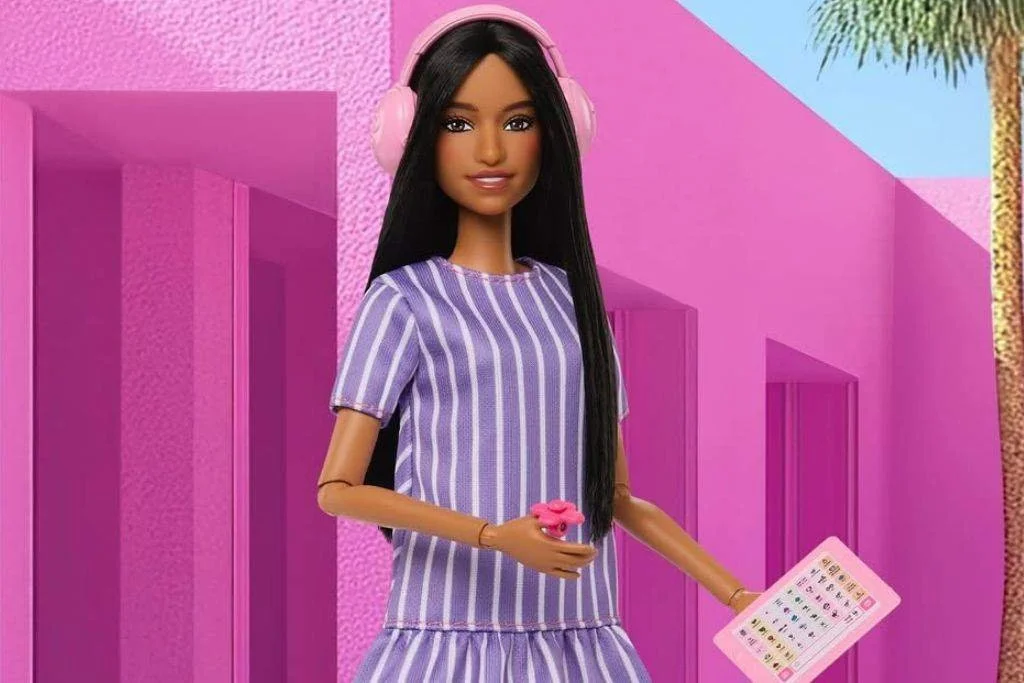
Mattel’s Autistic Barbie has been released to mixed reviews from advocates
Article by Dr Timothy Broady, Associate Professor, Arts, Design & Architecture (ADA), Centre for Social Research in Health.
The release of the new Autistic Barbie has been met with a seemingly equal mix of enthusiasm and criticism. Developed in consultation with the Autistic Self Advocacy Network (ASAN), Autistic Barbie has been designed to reflect some common autistic experiences, including accessories to assist with sensory issues and an averted gaze instead of direct eye contact. Many advocates are excited to see increasing mainstream representations of autism.
On the flip side, others have voiced their concern, even anger, at what Autistic Barbie represents. The main concern is that Autistic Barbie doesn’t represent all autistic experience; that she portrays a message that there’s a “right” way to be autistic and all other experiences are invalid. These concerns question the impact of reinforcing stereotypes over broadening inclusion.
The issue of stereotyping is significant. Stereotyping is a key component of producing stigma. But it’s also important to note that a stereotype on its own does not equate to stigma. Stereotypes contribute to producing stigma when they lead to status loss and discrimination for the affected person or group. Stigma relies on an imbalance of power to exclude the stereotype.
As the dad of an autistic son, I applaud what Mattel and ASAN have attempted to do in creating Autistic Barbie. There are certainly elements that don’t resonate with my son or his experience of autism, but equally, I find it refreshing to see autism being publicly recognised in ways beyond other pop culture portrayals (e.g., Dustin Hoffman’s Ray Babbit in Rain Man or Dr Shaun Murphy from The Good Doctor).
I understand the criticism that a condition as diverse as autism cannot be properly portrayed in one doll. But I would also argue that recent TV shows starring real autistic people (e.g., Love on the Spectrum or The Assembly) have also only been capable of capturing a small segment of what it means to be autistic.
Don’t get me wrong – I have nothing but praise for shows like these.
My point is that showcasing a segment of autistic experience does not automatically devalue other autistic experience. By highlighting some common autistic experience, I see Autistic Barbie empowering the whole autistic community. She represents inclusion for all the diversity of autistic experiences, and in doing so, helps to normalise autism and challenge the stigma that still surrounds it.